In this comparison
Fries and Evenness
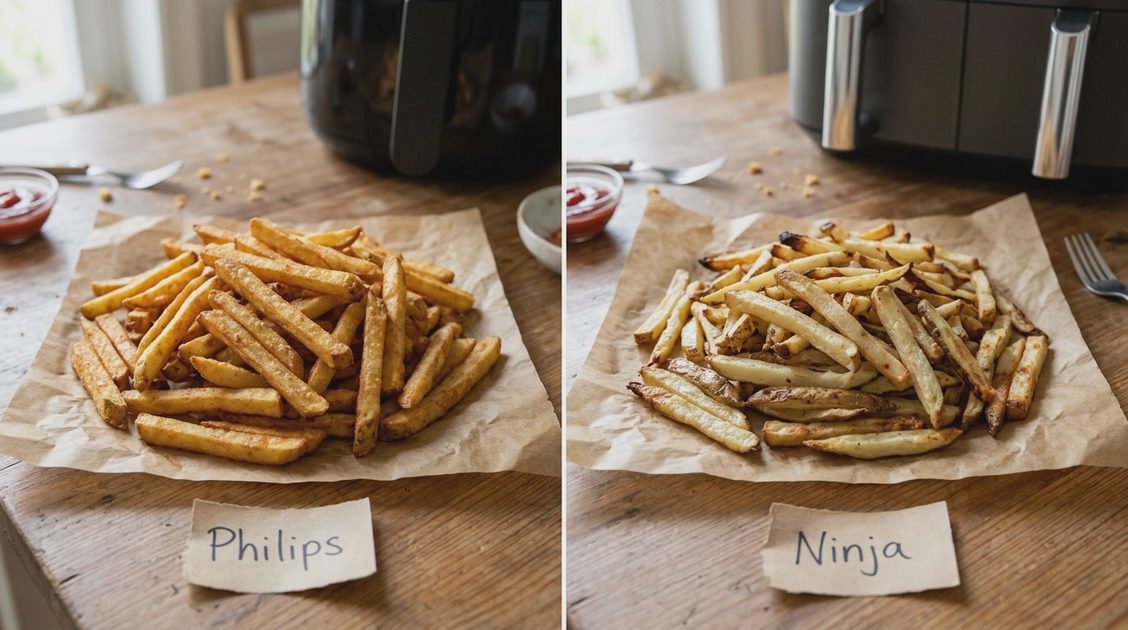
Fries are the most common reason people buy an air fryer, and Philips has the stronger test record here. IMTEST’s 2026 comparison gave the Philips 7000 Series Combi XXL Connected a 1.0 fries sub-score, describing even browning and a crisp exterior that stayed consistent across different piece sizes[reference:59]. In a separate n-tv direct comparison, Philips came out ahead, with Ninja noted as offering flexible glass containers but “no exact temperature selection” and less even fries in the four-way test[reference:60].
That does not mean Ninja makes bad fries. Ninja’s Max Pro has been described as the fastest and most homogeneous in some tests, and its dual-zone models cook two foods at once competently[reference:61]. The Philips advantage is consistency of browning, especially when the basket is not perfectly packed. If you cook fries often and hate sorting golden pieces from pale ones, Philips is the stronger choice.
Speed and Dual-Zone Design
Ninja’s design center is speed and flexibility. The Foodi MAX Dual Zone AF400EU offers 9.5L across two drawers with 2,470W, and tests describe it as faster than the competition because its actual temperature recovers quickly[reference:62]. The glass-basket Crispi line is a Ninja innovation that Philips does not match; it won a later glass-only test against a different field[reference:63].
Philips’ dual-basket answer, the NA154/00, offers 7.1L (3L + 6L), two independent heating elements and fans, Sync mode, and a single-basket mode that draws 1,225W instead of 2,450W[reference:64]. It is a well-executed dual-zone design, but it arrived after Ninja and has a smaller total capacity than the 9.5L Ninja. If maximum simultaneous capacity is the priority, Ninja has the edge.
Reliability and Cleaning
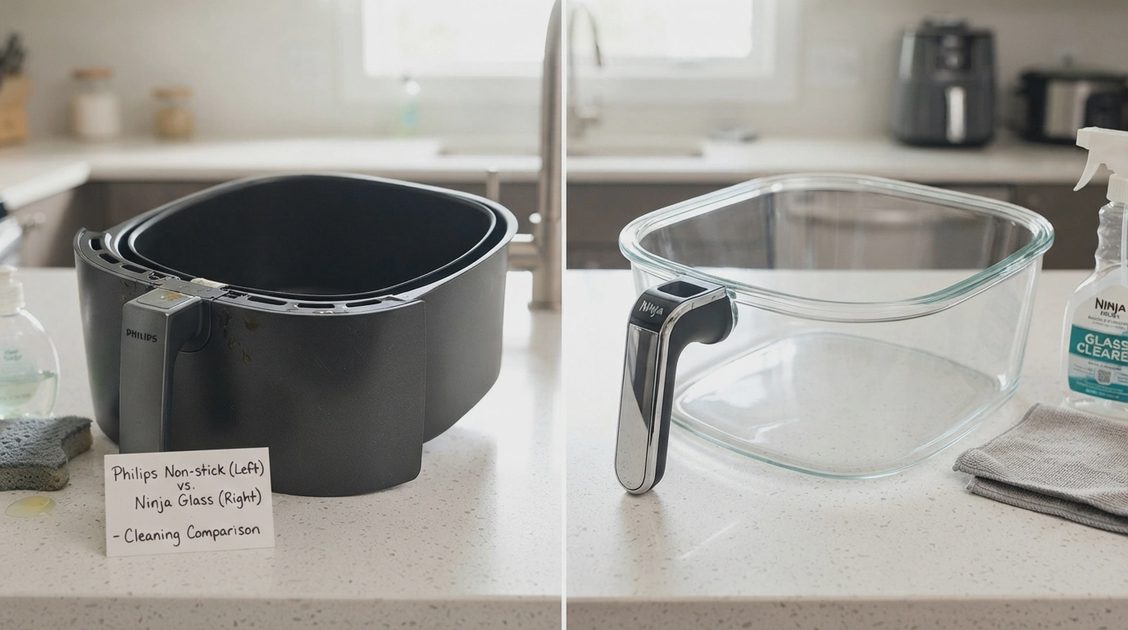
Ninja’s owner-review reputation for build quality is strong: reviewers describe “exceptional” build quality and daily use without issues, though there are also reports of error codes and a failed unit within months[reference:65]. Philips’ baskets are dishwasher-safe and the non-stick coating cleans easily after a short soak, but the NA154/00 has no viewing window, so you open the basket to check progress. Ninja’s glass-basket models let you see the food, which is a real convenience; Philips’ coating is easier to wipe clean than bare glass edges.
Who Should Buy Which
Priority | Pick | Why |
|---|---|---|
Most even fries and consistent browning | Philips | Top fries sub-score in independent testing. |
Fastest cooking and largest dual-zone capacity | Ninja | 9.5L dual zone and rapid temperature recovery. |
Glass basket to watch food cook | Ninja Crispi | Philips dual-basket models have no viewing window. |
Quieter, more appliance-like design | Philips | Matte finish and solid basket feel; less utilitarian. |
Single-basket electricity saving | Philips NA154/00 | 1,225W single-basket mode vs. full 2,450W. |
FAQ
Which makes crispier fries, Philips or Ninja?
Philips has the stronger independent fries score, with its 7000 Series Combi XXL Connected earning a 1.0 sub-score. Ninja is faster and offers glass baskets, but its fries have been described as less even in direct comparison[reference:68][reference:69].
Is Ninja more reliable than Philips?
Ninja has a strong build-quality reputation in owner reviews, but both brands have reports of failures. Neither has a decisive reliability advantage; buy from a retailer with a clear return policy.
Does Philips make a dual-basket air fryer?
Yes, the NA154/00 offers 7.1L across two independent zones with Sync mode and a single-basket power-saving mode. It is smaller in total capacity than Ninja’s 9.5L dual-zone models[reference:70].
Which is easier to clean?
Both have dishwasher-safe parts. Philips’ non-stick baskets wipe clean after a short soak; Ninja’s glass baskets are visible but heavier and can show water spots. Neither is difficult.
PL Tech Hub is independent and not affiliated with Philips or Ninja. Cooking scores cited are from independent European tests, not our own laboratory measurement. Reliability observations reflect published owner reviews and do not represent a statistical failure-rate study.