In this plan
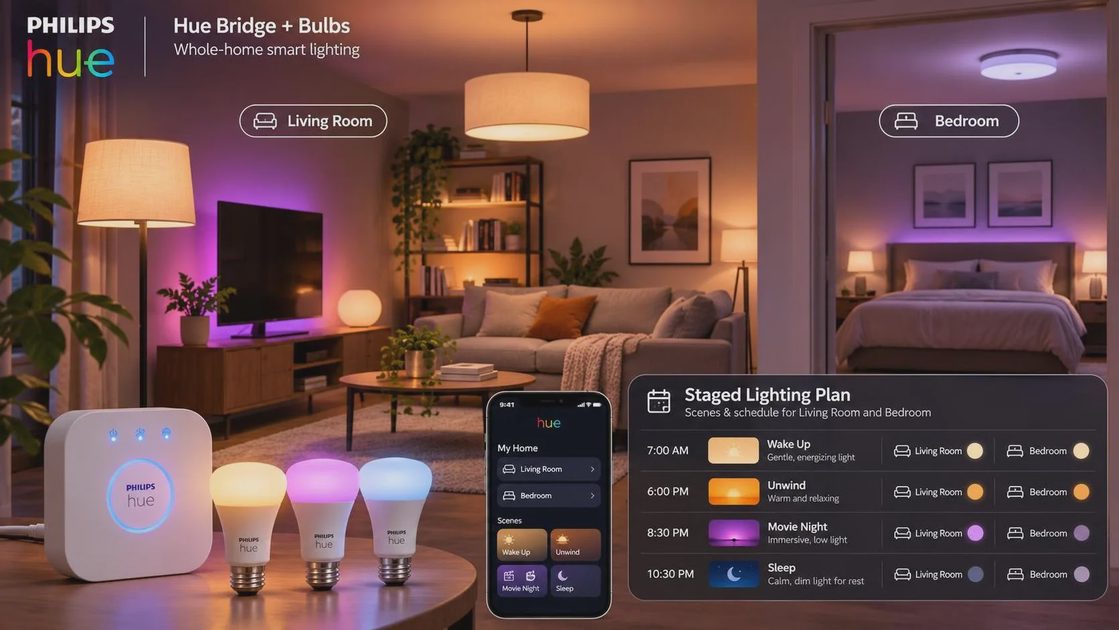
Stage 1 — Lighting That Pays Back Daily
Lighting is first because it is the Philips category with the clearest daily payoff and the most mature system. Start with a Hue Bridge ($70–$79.99) and two to four bulbs in the rooms you use most: living room, bedroom, and kitchen task area. The Bridge is the difference between Bluetooth bulbs and a system with remote access, multi-room grouping, and local automations[reference:106]. Skip colour bulbs for the first purchase if budget matters; white-ambience bulbs cover the routines that actually change how a room feels.
Why not start with a single colour bulb? Because the Bridge requirement makes a one-bulb Hue purchase irrational. Either commit to the system at two to four bulbs, or choose a cheaper Wi-Fi bulb for a single lamp and wait on Hue.
Stage 2 — Kitchen Appliance, One at a Time
Add one kitchen appliance, not a suite. For most households, that is an air fryer sized to the family: 6L-class for two to four people, 7L dual-basket for four to six with hosting. Philips’ even cooking is the reason to choose it over a cheaper single-zone model; the dual-basket NA154/00 adds independent zones and a single-basket power-saving mode[reference:107]. Do not buy an air fryer and a separate Philips blender or coffee machine in the same season unless you have a specific routine that needs both. Each appliance takes counter space and has its own cleaning cadence.
Stage 3 — Personal-Care Routine
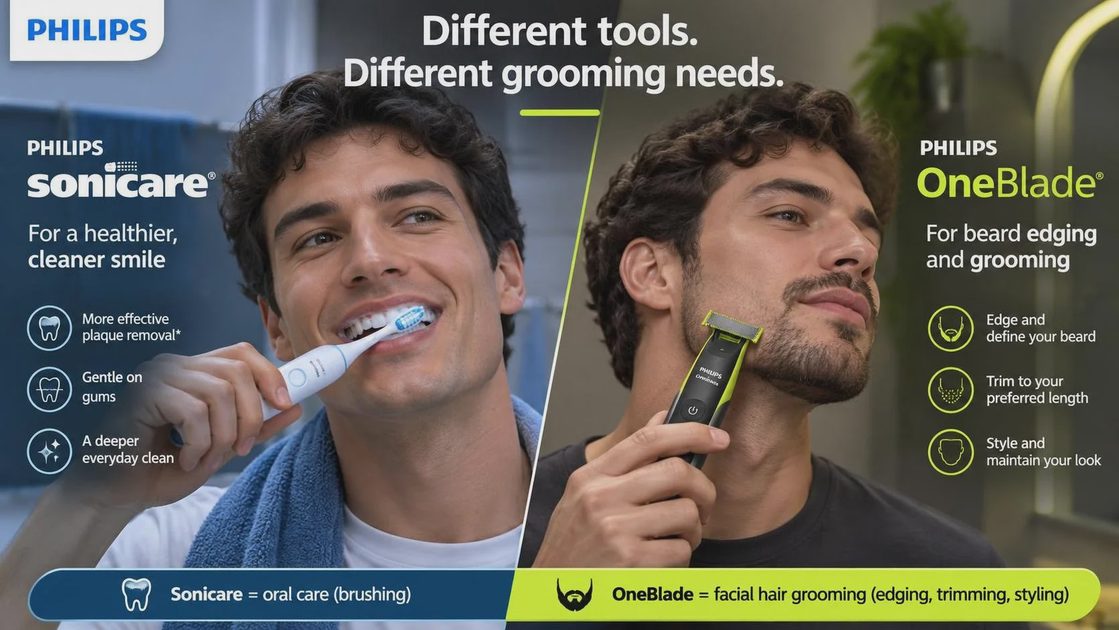
Personal care comes last because it is the most individual purchase. Choose one based on the routine you already have: Sonicare for a brushing upgrade (budget ~$41/year in genuine heads), or OneBlade for stubble and edging (budget $39–$78/year in blades). Do not buy both as a “starter kit” unless you will actually use both. A Sonicare with EasyStart is the safer first electric toothbrush; a OneBlade is the safer first beard-maintenance tool.
What Not to Buy First
A single Hue bulb without a Bridge. It is a limited device and a poor introduction to the system.
A full “smart home” bundle across lighting, kitchen, and grooming at once. The products do not share one unified platform; the consumable costs add up.
A Philips TV as the centerpiece of a smart-home plan. The U.S. value TVs are 60Hz and not a smart-home hub; buy the TV for the TV, not for the ecosystem.
Flagship headphones before the basics. Audio is the least “system” category in the Philips lineup; buy it when you have a specific listening need, not to complete a set.
FAQ
What Philips product should I buy first for a smart home?
A Hue Bridge and two to four bulbs in the rooms you use most. Lighting has the clearest daily payoff and the most mature system; the Bridge is required for multi-room and remote control.
Can I build a Philips smart home without Hue?
Yes, but the other Philips categories do not form one unified ecosystem. An air fryer and a Sonicare toothbrush are standalone products; Hue is the only Philips category that functions as a multi-device system.
Do I need the Hue Bridge for a few bulbs?
For Bluetooth control in one room, no. For multi-room grouping, remote access, and automations, yes. Buy the Bridge if you are committing to two or more rooms.
What is the hidden cost of a Philips smart-home setup?
Consumables: Sonicare heads (~$41/year), OneBlade blades ($39–$78/year), and Hue’s per-bulb premium. The Bridge is a one-time cost; the recurring costs are the ones that surprise new buyers.
PL Tech Hub is independent and not affiliated with Philips/Signify. This staged plan is editorial and based on published pricing, system requirements, and consumable costs checked in late 2026. It is not a sponsored buying sequence.