In this guide
What “Philips” Actually Means in 2026
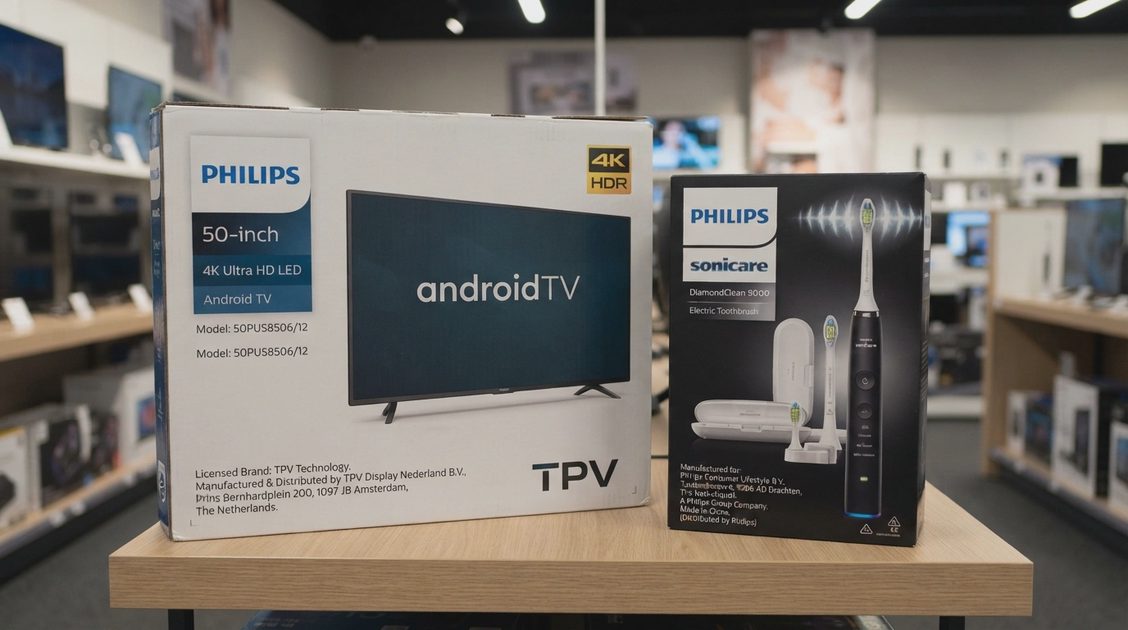
Philips sold its consumer electronics licensing business years ago. In the U.S., “Philips” TVs are built and sold under license by Skyworth; the 7985 QLED that Digital Trends reviewed is a Roku TV assembled under that arrangement, not a set that came off a Philips-owned line. Oral care, grooming, and Hue lighting still sit closer to the core Philips organization, but even there the supply chain is global and model numbers differ by country.
This matters because the old shortcut — “Philips means Dutch engineering” — no longer holds uniformly. The right question is: which Philips category, built by whom, with what consumable cost?
Why the badge alone is no longer enough
A licensed TV and a Sonicare toothbrush share a logo but not a quality-control system. Treat them as separate purchase decisions. The former is a value-TV play; the latter is a regulated health-adjacent device with a long consumable tail.
Where Philips Still Earns the Money
Oral care: the consumable math is worse than the sticker
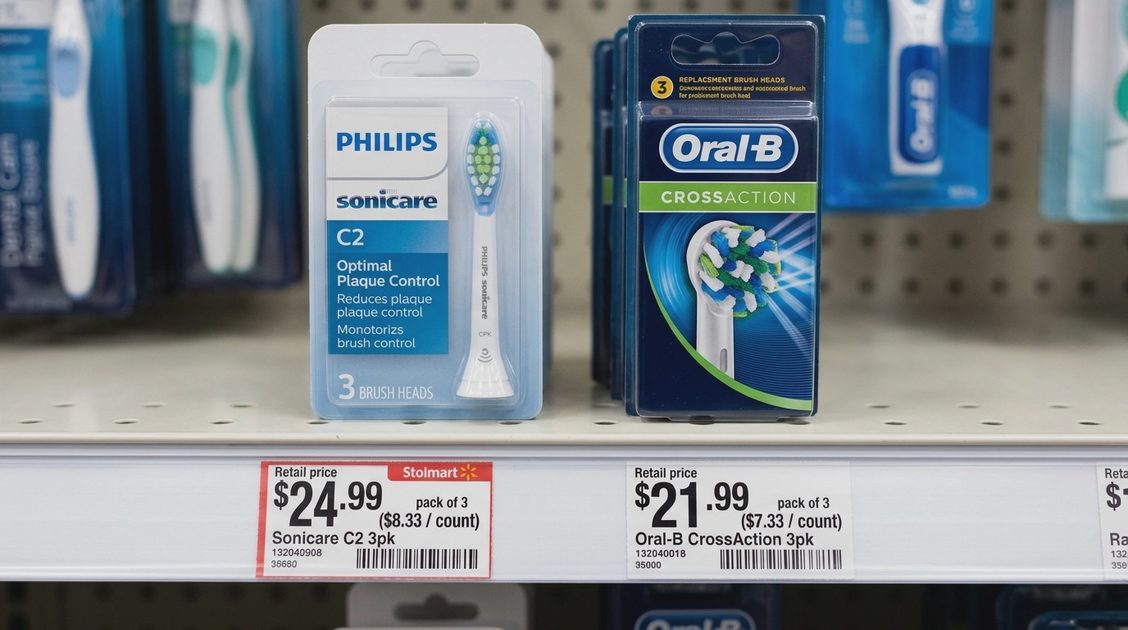
Sonicare remains a serious toothbrush. But the real cost shows up after checkout. Genuine Sonicare C2 heads ran about $10.26 per head in a 3-pack when checked in November 2026; the comparable Oral-B CrossAction 6-pack worked out to $6.66 per head[reference:1]. At four heads a year, that is roughly a $14 annual gap in Oral-B’s favor at those pack sizes[reference:2]. If you value quieter brushing and adjustable intensity, Sonicare is defensible. If you want the lowest three-year cost, Oral-B usually wins.
Hue: still the most reliable ecosystem, still the most expensive entry
Hue’s Bridge costs about $79.99, and a two-bulb color pack about $98.99 as of November 2026[reference:3]. A comparable Govee four-pack was $33.99 with no hub required[reference:4]. Hue wins on local API access, Matter support through the Bridge, and a two-to-three-year bulb warranty; Govee wins on first-room cost by a wide margin. Hue is worth it if you are building a whole-home system, not if you want one colorful lamp.
Airfrying: Philips is still a top-tier performer
Independent European tests in 2026 placed Philips at or near the top for cooking evenness and overall satisfaction, with the 7000 Series Combi XXL Connected earning a best-in-class fry score in one German comparison[reference:5]. Ninja remains the stronger reliability and speed play in several tests, but Philips is not a brand you avoid in this category[reference:6].
Where You Should Hesitate
TVs: buy the model, not the brand
The Philips 7985 at $389 for 55 inches is genuinely fun for evening streaming, but it is a 60Hz panel without local dimming; HDR never really pops, and 120Hz gamers should look elsewhere[reference:7][reference:8]. Higher-end Philips OLEDs such as the OLED911 are excellent in Europe, but availability and pricing in the U.S. are inconsistent at best[reference:9]. In America, Philips TV is a value proposition, not a premium one.
Headphones: good mid-range, not flagship-beating
The Fidelio L5 delivers 50-hour battery life and competent ANC at roughly $200–$250 in the U.S. if priced competitively, but sound coherence trails the best sub-$250 rivals[reference:10]. The H8000 series can be found near $50 on sale and is a strong budget commuter pick, not a critical-listening headphone[reference:11].
The Ownership-Cost Test
Apply this three-question filter before any Philips purchase:
What does the consumable cost per year? OneBlade blades run about $25–$30 for a multi-pack, and Philips recommends replacement roughly every four months under stated usage assumptions[reference:12][reference:13]. That is $75–$90 a year in blades alone.
Does the product need a hub or bridge to reach full function? Hue does; Govee mostly does not. A $79.99 bridge changes the math on a “cheap” starter kit.
Is the model name globally stable? Philips TV and air fryer model numbers vary by country. Buy the U.S. model number, not the European review’s model number.
Who Should Buy Philips — and Who Should Not
Buyer profile | Verdict | Why |
|---|---|---|
Household replacing a manual toothbrush | Buy Sonicare | EasyStart and intensity control help new users; accept the head cost. |
Renter wanting one smart lamp | Skip Hue | Bridge cost makes a single-lamp setup irrational; look at Govee or Wi-Fi bulbs. |
Family cooking 4–6 portions most nights | Buy a Philips air fryer | Even cooking and basket capacity are competitive; cleaning is straightforward. |
120Hz console gamer | Skip Philips TV | Value Philips sets are 60Hz; the OLEDs that game well are not consistently sold in the U.S. |
Commuter who wants cheap ANC | Consider H8000 on sale | 70-hour battery and working ANC at a budget price; do not expect Fidelio sound. |
FAQ
Is Philips a Chinese brand now?
No. Philips is still a Dutch health-technology company, but consumer-electronics categories operate through licensing and contract manufacturing. U.S. Philips TVs are built under license by Skyworth; other categories have different arrangements[reference:14].
Are Philips products still high quality?
Category by category, yes in oral care, Hue, and air frying; mixed in TVs and mid-range headphones. The badge alone is not a quality guarantee in 2026.
Is Philips cheaper than Oral-B or Govee?
Usually not on total cost. Sonicare heads cost more per year than Oral-B standard heads; Hue costs more upfront than Govee for a one-room setup[reference:15][reference:16].
Should I wait for a newer Philips model?
Only if you need a specific feature. Philips’ 2026 AI toothbrush and Ambilight game-detection features are real, but they carry launch pricing[reference:17][reference:18]. Prior-generation models often deliver 80–90% of the utility at a lower price.
PL Tech Hub is independent and not affiliated with Philips. Prices were checked against U.S. listings in November 2026 and may change. No payment was received for this verdict.