Quick verdict:
In this comparison
Oral Care: Philips Sonicare vs. Oral-B
Sonicare and Oral-B are both legitimate clinical tools; the difference is consumable cost and feel. At U.S. pack sizes checked in late 2026, a Sonicare C2 head worked out to about $10.26 per head, while an Oral-B CrossAction 6-pack was about $6.66 per head. Over a year of four heads, that is roughly a $14 gap in Oral-B’s favor. Sonicare wins on quieter brushing and adjustable intensity; Oral-B wins on annual cost and a small round head that suits crowded teeth.
Value verdict: Oral-B for lowest three-year cost; Sonicare for gentle feel and EasyStart transition. Neither is a bad brush.
Lighting: Hue vs. Govee
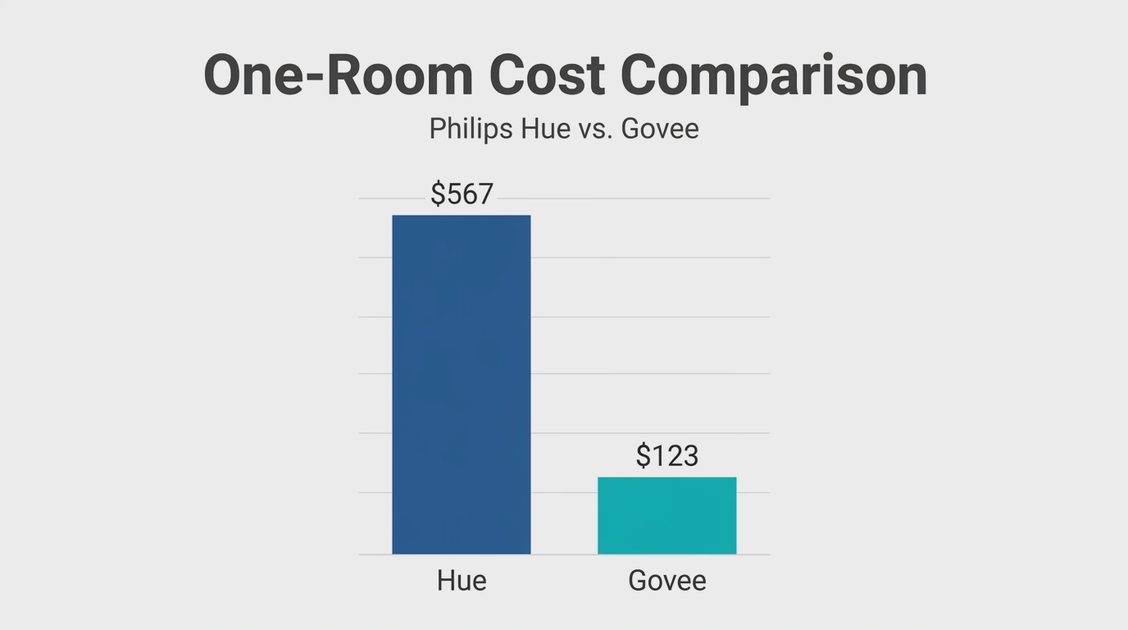
Hue’s strength is reliability and local control; Govee’s strength is first-room cost. A Govee four-bulb pack plus a TV backlight has totaled about $123.98 with no hub; the matching Hue one-room set has totaled about $567.93 with a Bridge and sync box. Hue’s Bridge alone is $70–$79.99, and its bulbs are dimmer on paper (810 lumens vs. Govee’s 1,000) but dim to 0.2% instead of 2%[reference:89].
Value verdict: Govee for one room or a budget setup; Hue for whole-home, local automation, or a longer accessory roadmap.
Air Frying: Philips vs. Ninja
Philips has the stronger independent fries evenness score — a 1.0 sub-score for the 7000 Series Combi XXL Connected[reference:90]. Ninja has the broader dual-zone lineup, faster temperature recovery, and glass-basket options[reference:91]. Philips’ dual-basket NA154/00 offers 7.1L with a single-basket power-saving mode; Ninja’s AF400EU offers 9.5L across two drawers.
Value verdict: Philips for even browning and a more appliance-like design; Ninja for speed, capacity, and glass-basket visibility.
TVs: Philips vs. TCL/Hisense
The U.S. Philips 7985 at $389 is a 60Hz QLED with Ambilight and Roku, no local dimming, and average HDR[reference:92]. TCL and Hisense offer Mini-LED sets at slightly higher prices with better contrast and gaming features. The Philips OLEDs that would compete on picture quality are not sold in the U.S.[reference:93].
Value verdict: TCL/Hisense for picture-per-dollar and gaming; Philips 7985 for Ambilight and a fun budget streaming set.
Headphones: Philips vs. Sony/Bose
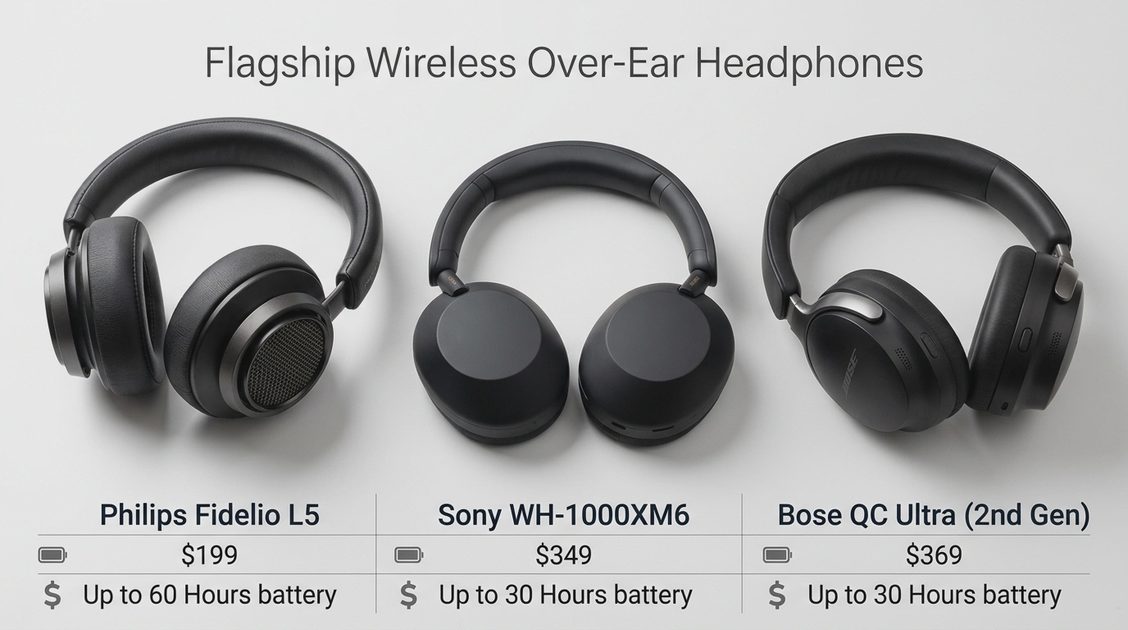
The Fidelio L5 at ~$200–$250 offers 50h ANC / 60h passive battery and a comfortable fit, but its sound is “not as coherent or clean” as pricier rivals[reference:94]. Sony and Bose flagships remain the sound-quality benchmark; budget Philips H8000-series models compete on price and battery, not refinement.
Value verdict: Philips for battery and price in the mid-range; Sony/Bose for sound quality at the flagship end.
FAQ
Is Philips better than Oral-B?
Neither is universally better. Sonicare is quieter and offers adjustable intensity; Oral-B’s genuine heads cost less per year and its small round head suits tight spaces. The right pick depends on which matters more to you.
Is Hue worth it over Govee?
For a whole-home system or local automation, yes. For one room or a first smart bulb, Govee’s lower first-room total is the more rational purchase.
Are Philips TVs good value?
The U.S. 7985 is good value for streaming and Ambilight at $389, but not for HDR or 120Hz gaming. TCL and Hisense offer better picture-per-dollar at similar sizes.
Do Philips headphones sound as good as Sony or Bose?
No. The Fidelio L5 is competitive on battery and features at its price, but its sound is not as coherent or clean as the best Sony/Bose models at the flagship end.
PL Tech Hub is independent and not affiliated with Philips, Oral-B, Govee, Ninja, TCL, Hisense, Sony, or Bose. Value judgments are category-specific and based on published specifications, independent test scores, and U.S. pricing checked in late 2026. No single brand wins across every category.